Meeting Room or Covered Outdoor Space for a Casual Swap?
Choosing a meeting room or covered outdoor space for a casual swap? Match the venue to your items, access needs and weather plan before inviting neighbours.
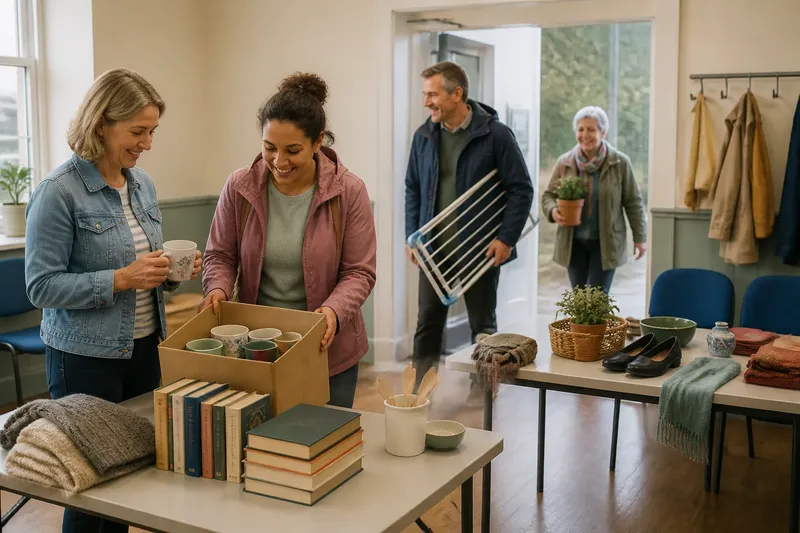
Two neighbours arrive with a box of mugs and a folded coat rack just as a drizzle begins. If you are choosing a meeting room or covered outdoor space for a casual swap, that small moment matters: the right venue lets people browse without turning every arrival into a logistical puzzle.
Imagine that Jo is organising an informal household-item exchange for neighbours at a community centre. The group is small, the goods are varied, and the venue offers a meeting room or a roofed courtyard. Jo’s decision is not about finding a perfect space. It is about matching the space to what people will carry, how they will browse and what the venue can comfortably support.
Start with the objects
Jo begins by asking neighbours what they expect to bring. A few books, scarves, kitchen utensils and small ornaments are easy to carry indoors. A bulky clothes airer or a stack of plant pots needs more room to set down and inspect. The likely mix shapes the layout more than the event’s modest size does.
In the meeting room, Jo can place smaller items on tables and keep a clear route between the door and the browsing area. Books can sit together, while kitchenware gets a stable surface rather than a crowded windowsill. The room also makes it easier to keep coats, bags and items awaiting collection from spilling into the display.
The covered courtyard gives awkward or slightly dusty objects more breathing room. People can look over a plant stand or a basket of gardening odds and ends without worrying about indoor floors. But an open-sided shelter is not automatically dry: wind can drive rain under the roof, and damp surfaces can make cardboard packaging soggy.
Ask for a rough list of intended items, not a promise that everyone will bring exactly what they mention.
Compare the two spaces
Jo weighs the options against the actual visit. The meeting room is the stronger choice if guests need a calm place to examine small goods, if anyone may prefer a quieter setting, or if the weather is unsettled. Nearby chairs can help someone pause while deciding, and a table makes it easier to compare items without holding them in a queue.
The courtyard may be more comfortable if people will arrive with muddy boots, large reusable containers or objects that are awkward to manoeuvre through a doorway. It can also make the event feel less contained: guests may browse briefly, then move aside to chat. That works only if the covered area has enough shelter and the ground stays manageable.
Neither option settles every access question. Jo checks the route from the entrance, whether a step or narrow doorway lies in the way, and where people can leave bags without blocking others. A venue’s name is no substitute for checking the actual door, surfaces and available facilities.
- Choose the room for smaller, cleaner items, close browsing and a sheltered place to pause.
- Choose the covered space for bulkier or outdoor-friendly goods, provided wind and damp will not reach them.
- Reconsider the item mix if it includes objects that need more floor area than either venue can spare.
Plan the arrival
Jo’s first plan is a single entrance for bringing items in and browsing. Thinking it through, Jo notices that people with bags could meet visitors leaving with new finds. Instead, a small sign points arrivals to one side of the room and outgoing guests towards the other. There is no elaborate ticketing; the aim is simply to stop the doorway becoming a pile-up.
For the courtyard, Jo would place the display away from the entrance and leave an obvious path through the space. A table near the sheltered edge could hold small, dry items, while larger pieces stay where they will not obstruct people passing. If the layout cannot leave a clear route, that is a reason to use the room or choose a different venue.
Jo also asks the centre what furniture is already there and where used items may be placed afterwards. A venue may have tables, but not enough of the right size; the room may be available, but not for storing leftovers. Confirm the booking conditions, access arrangements and any rules for food, waste or public use with the venue. Where a decision depends on its instructions or local rules, follow those requirements.
What if plans change?
What if rain reaches the courtyard?
Jo would move the swap indoors only if the room is available and the change has been agreed with the venue. Otherwise, the invitation should make clear that the event may be postponed or cancelled, rather than leaving guests to guess.
How can guests know what to bring?
The invitation can give a short description, such as clean household items that one person can carry, and name anything the group is not accepting. That helps neighbours choose suitable goods without turning a casual exchange into a formal collection.
What should happen to unclaimed items?
Jo decides this before advertising the event and states the plan plainly. Guests might be asked to take home what they brought, or the organiser could arrange a separate agreed destination for suitable leftovers.
Can both spaces be used?
They can, if the venue permits it and the layout remains easy to understand. For Jo’s small exchange, splitting goods across two spaces would add signs and extra movement without solving a real problem.
Make the decision
Jo learns that the courtyard sounds appealing, but the expected mix includes books, mugs and clothing, and the forecast is uncertain. The meeting room is available, with tables near the entrance and a clear route to the browsing area. Jo chooses it, asks guests to leave bulky furniture at home and tells everyone where unclaimed items will go.
If the imagined group had instead planned to bring plant pots and a folded clothes airer on a dry day, the covered courtyard might have suited them better—assuming its access and ground were suitable. The decision follows from the objects and the route, not from a general rule that indoor spaces are more organised or outdoor ones are more relaxed.
For a casual swap, a meeting room or covered outdoor space should make it easy to arrive, browse and leave without crowding the goods or each other. Before you send the invitation, walk the route with a full shopping bag in hand and picture where each item will land. If that path feels awkward, adjust the layout or pick the other space.